Everyone arrives at Ephesus with the same Artemis in their head: bow over her shoulder, hunting dog at her side, moon in the sky, twin brother Apollo somewhere nearby. Then they walk into the museum in Selcuk and meet a goddess covered from collarbone to knee in rows of strange round objects, flanked by lions, bulls and griffins, wearing what looks like a beehive on her head. Same name. Almost nobody's the same goddess.
That mismatch is not a mistake in the museum labels. It is the whole story.
Who was she before the Greeks arrived?
Long before Ionian Greek settlers reached this coast, the local Anatolian population already worshipped a mother goddess here — a figure related to Cybele, the great mother deity of inland Asia Minor. Ancient sources call an early form of her name "Artimus." She was tied to fertility, to the land, and to this specific spot: the Ephesians insisted their goddess was born locally, not on the Greek island of Delos, which is where the mythology books say Artemis and Apollo came into the world.
When Greek settlers arrived, they did what Greeks so often did with a foreign deity: they gave her their own goddess's name because the roles seemed to overlap — wild places, animals, protection. The label stuck. The goddess underneath it did not fully change.
So is she the same Artemis from Greek mythology?
Only in name, and even that took work. The Temple of Artemis at Ephesus held a goddess who behaved much more like a mother-and-fertility deity than a virgin huntress. Put the two side by side and the differences are hard to miss.
| Artemis of Ephesus | Artemis of Greek myth | |
|---|---|---|
| Role | Mother goddess of fertility, protector of the city and its wild nature | Virgin huntress, goddess of the moon and wilderness |
| Birthplace (by local tradition) | Ephesus, on the spot | The island of Delos |
| Imagery | Rigid, column-like figure covered in round objects, animals and a mural crown | Athletic figure with bow, quiver and hunting dogs |
| Priesthood | Eunuch high priests and priestesses called Melissae ("bees") | No standard priesthood tradition of this kind |

What are those round things on her chest?
This is the question we get asked most, and we will give you the honest, slightly unsatisfying answer: nobody is completely sure. For a long time the popular assumption was that they were breasts, a fairly literal symbol of the fertility goddess she was. Modern scholarship leans the other way — many researchers think the objects are more likely bull testicles, hung as offerings from sacrifice, or possibly gourds, eggs or dates symbolising abundance. Later versions of her statue even added a zodiac symbol across her chest, a touch of Babylonian astrology layered on centuries after the original image was set.
Whatever the objects meant to the people who carved them, the message to a worshipper was never subtle: this goddess is about abundance, fertility and life pouring out in every direction.
What is not in dispute is the rest of her outfit. Her robe is carved with lions, leopards, goats, griffins and bulls — a costume that earned her the old Greek title Potnia Theron, "Lady of the Animals." She is guarding wild nature, not hunting it.
Why bees and eunuchs?
The cult around her was as distinctive as the statue. Ancient sources describe her priestesses as Melissae — "bees" — with a high priestess sometimes called the Bee Keeper. Look closely at surviving Ephesian coins and you will spot her sacred bee stamped right into the metal. Her high priest, under Persian-era patronage of the cult, carried the title Megabyxus, translated roughly as "the one set free for the cult of the divinity" — a role widely understood to have involved ritual castration, the ultimate statement of total devotion to a goddess of fertility rather than a rival to it.
- She ran the local economy. The temple doubled as the region's safest bank, and pilgrims poured in for her month-long spring festival.
- She had an official title. Ephesus itself was proud to be called neokoros — "temple-keeper" — of her cult, and stamped the word on its coins.
- She employed half the city. Silversmiths like Demetrius made a living selling silver shrines of her to visiting pilgrims — the trade at the heart of the riot of the silversmiths.
- Her image traveled. Copies of her statue have been found scattered right across the Roman world, evidence of just how far her popularity reached.
Was she really "Diana" of the Bible?
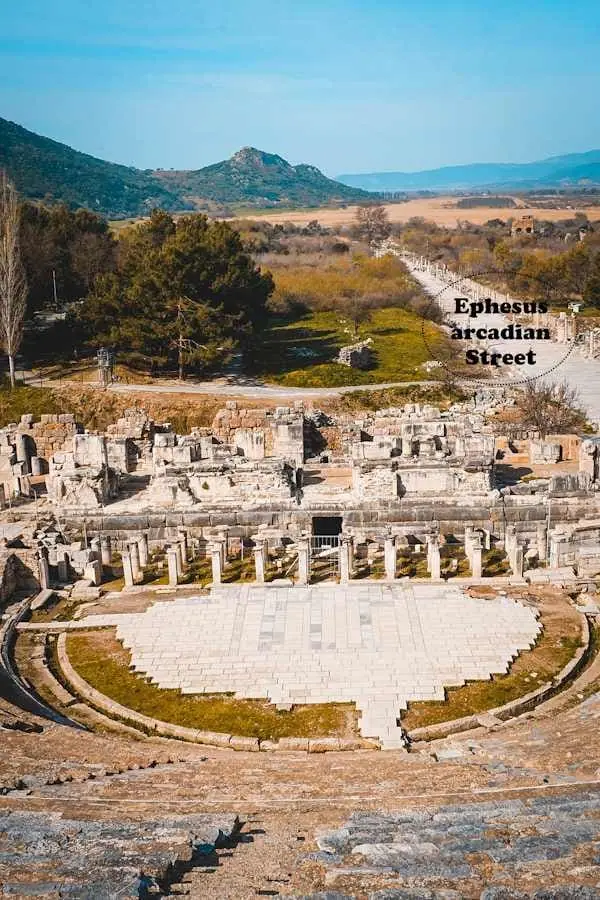
This is where the name-swapping gets one layer more confusing. When the mob in the Grand Theater chanted "Great is Artemis of the Ephesians" in Acts 19:28 and again at Acts 19:34, the King James translators rendered her Roman name instead: "Great is Diana of the Ephesians." But the Roman goddess Diana was, like the Greek Artemis, essentially a huntress and moon goddess — not a close match for the many-symboled Anatolian mother goddess Ephesus actually worshipped. The Bible is technically using a Roman label for a Greek label for an Anatolian original. Three names, one goddess, and Luke's account in Acts is admirably precise about the one detail that mattered to the silversmiths: her cult was worth defending with a two-hour riot.
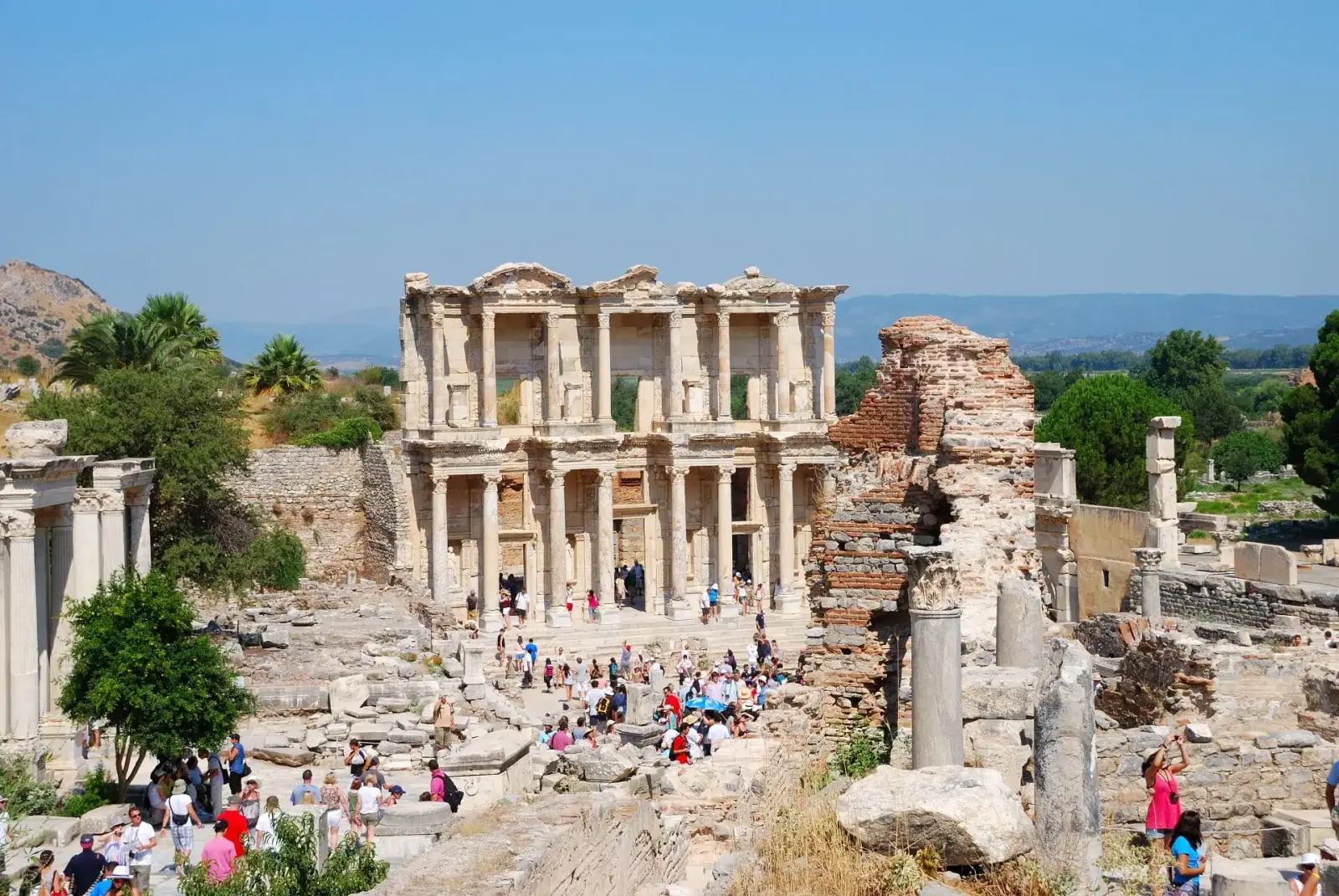
We tell this part of the story on the ground at the theater and at the temple site itself, because standing there is the only way the scale of it really lands — a goddess so central to one city's identity and income that a single traveling preacher genuinely threatened to bring the whole economy down.
Where can you meet her today?
Almost nothing is left standing at the temple site itself — one column, re-erected from fragments, in a marshy field. But the goddess herself survived better than her building. Two remarkable statues of her, the "Great Artemis" and the "Beautiful Artemis," were found carefully buried — not smashed — inside the city's Prytaneion, and both now stand in the Ephesus Museum in Selcuk. Whoever hid them as the city turned Christian chose to preserve her rather than destroy her, which is the closest thing this goddess has to a happy ending. Stand in front of her there, count the rows of round objects for yourself, and you will understand exactly why our guests always ask the same question.
Sources & further reading
- Livius.org: Artemis of Ephesus — origins, iconography and the cult of the Ephesian goddess
- Britannica: Diana (Roman religion) — the Roman goddess the KJV names her after
- Acts 19:23–41 (KJV) — Bible Gateway — the riot of the silversmiths