
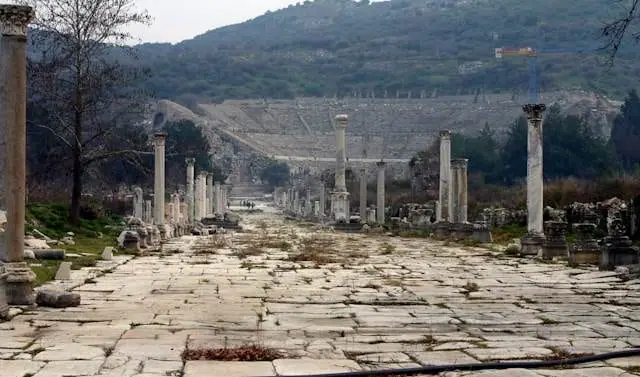
Demetrius finishes his speech, and the room answers with the slogan that will carry the day: Great is Artemis of the Ephesians! (The KJV, following older English custom, gives the goddess her Roman name, Diana.) It was, in fairness, the city's truest boast — her temple was the largest in the Greek world, her festivals fed the town, her name secured its bank vaults.
From slogan to riot
Watch what Luke shows about crowds: the shout starts in a trade meeting, spills into the streets, gathers thousands who "knew not wherefore they were come together" (19:32), and finds its amphitheater. A slogan simple enough to chant is transport for a mob — the mechanics have not changed in twenty centuries. By verse 34 the cry will run continuously for two hours.
Standing in the verse
This verse belongs to the Grand Theater like no other in Scripture. Sit midway up the bowl, imagine every seat filled and every mouth on one sentence — then notice the deepest irony of the site: the goddess whose greatness was chanted here kept one column, while the man the chant opposed is read aloud in this theater weekly, by pilgrims, in a hundred languages.
Sources & further reading
- Acts 19:28–34 (KJV) — Bible Gateway — read the passage in context
- UNESCO World Heritage: Ephesus — the theater today