
There is a question that occurs to almost everyone walking through Ephesus: where did everything go? The statues that filled the niches, the friezes from the temples, the jewelry, the coins, the household gods — the ruins are magnificent and almost entirely empty. The answer is a modest building in the middle of Selcuk, and it is one of the finest small archaeological museums in Turkey.
The two Artemis statues
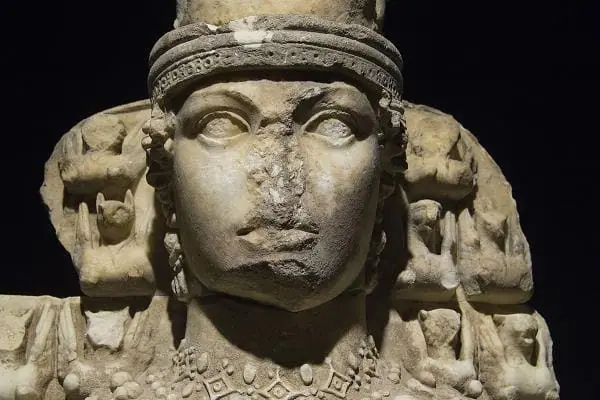
The museum's treasures, and the reason most visitors come, are the two remarkable cult statues of Artemis of Ephesus — the "Great Artemis" and the "Beautiful Artemis" — recovered from the Prytaneion where they had been carefully buried, probably by Christians who could not quite bring themselves to destroy them. They are covered from chest to waist in rows of oval objects whose meaning scholars have argued over for a century and a half: eggs, bulls' testicles, gourds, amber drops. Whatever they are, these are the images that Demetrius's guild reproduced in silver, and that a whole city chanted for in the theater (Acts 19:28). Standing in front of them, the riot suddenly has a face.

What else is inside
The collection is arranged roughly by findspot, which makes it easy to connect the objects to places you have just walked. The Terrace House rooms hold frescoes, mosaics and the small domestic objects of the households in which the earliest Christians met — cooking pots, lamps, a bronze statuette of Priapus that reliably surprises visitors. Elsewhere: finds from the Temple of Artemis including ivory and gold from the archaic period; the head and forearm of the colossal statue of the emperor Domitian; the marble frieze from the Temple of Hadrian; and material from the gladiator cemetery whose skeletons told archaeologists what these men ate and how they died.

Why it matters to a biblical visit
The New Testament's Ephesus is a city of objects as much as buildings — silver shrines, magic books, images "made with hands" (Acts 19:26). The museum is where those objects survive. For pilgrims it does something the ruins cannot: it puts the actual material of the confrontation in front of you, the goddess and her economy on one side, and the plain lamps and dishes of the household churches on the other.
Visiting
The museum sits in the center of Selcuk, a five-minute walk from the Basilica of Saint John and a short drive from the ruins, and needs about an hour. It has its own ticket, is air-conditioned, and is therefore the single best thing to do in the Ephesus valley at two o'clock on an August afternoon. We add it to full-day and tailor-made itineraries on request; it is also the easiest independent add-on for visitors staying in Selcuk.

Sources & further reading
- Britannica: Ephesus — the city whose finds fill the museum
- Britannica: Temple of Artemis — the Artemision and its cult
- Acts 19:23–41 (KJV) — Bible Gateway — the silver shrines of the goddess