How far is Corinth from Ephesus? In a straight line across the Aegean, about 390 km (240 miles, or 210 nautical miles) — roughly the distance from London to Amsterdam, or New York to Pittsburgh. That is the map answer. The sailing answer is longer and slower, because no captain in the first century pointed a ship at open water and held course for two days straight. Paul's ships followed the islands, and so did everyone else's.
The two cities are the closest thing the New Testament has to twin capitals — Paul's longest missions outside Jerusalem, sitting on opposite shores of the same sea, and the water between them carried more of the early church's traffic than any other stretch of the Mediterranean he used.
The straight-line distance, and why Paul's ship never sailed it
Measured directly, Corinth sits about 388 km (241 miles) from Ephesus — 210 nautical miles, the unit that actually mattered to a first-century helmsman. But a straight line runs across open Aegean water, out of sight of land for long stretches, which ancient navigators avoided whenever they could. Without reliable compasses, captains steered by keeping islands in view and hopping between them: south from Corinth's eastern port at Cenchreae into the Cyclades, then east through the island chain toward Samos and the coast, before turning south into the gulf at Ephesus's harbor. The real route was noticeably longer than the map suggests, and it was also, frankly, the safer one.
How long did the crossing actually take?
Acts never says — which is worth being honest about before reaching for a number. What we do know is roughly how fast a ship like Paul's could go: ancient Mediterranean merchant vessels typically averaged 4 to 5 knots under working sail, with the fastest runs touching 6. At that pace, 210 nautical miles of open water is a day and a half to two days of pure sailing time. Add the island-hopping detour, the need to make harbor before dark in unfamiliar waters, and days lost waiting out contrary wind, and a realistic crossing likely ran several days rather than two — closer to the 6-to-8-day passages recorded for comparable, somewhat longer Mediterranean routes of the period. Nothing in Acts pins it down further, and we would rather say that plainly than invent a number that sounds more precise than it is.
Did Paul sail this route, or walk it?
Both, in fact, on different trips — and the difference is one of the more interesting details Acts hands us. Paul's first arrival in Ephesus, at the very end of his second missionary journey, was by sea: he "came to Ephesus" (Acts 18:19) straight from Corinth, dropped off Aquila and Priscilla, held one sabbath's debate in the synagogue, and sailed on toward Caesarea before anyone could talk him into staying. But when he kept his promise and returned for the long stay that fills Acts 19 — over two years, the longest ministry of his life — he came a completely different way: overland, "having passed through the upper coasts" of Galatia and Phrygia (Acts 19:1). No ship at all for the visit that actually built the Ephesian church.
The sea lane did not go quiet in between. While Paul was walking the inland road toward Ephesus, the brilliant preacher Apollos, freshly corrected in his theology by Aquila and Priscilla, sailed the Corinth–Ephesus route in the opposite direction — carrying a letter of introduction from the Ephesian believers, "mightily" convincing the Corinthian synagogue that Jesus was the Christ. One route, two travelers, crossing it the same season from opposite ends.
The two churches never really lost sight of each other. Letters and messengers used the same water Paul had already crossed twice.
Why the distance mattered so much
Because Paul kept the two cities in conversation for years after he left Corinth behind. Writing from Ephesus, he tells the Corinthian church plainly, "I will tarry at Ephesus until Pentecost" (1 Corinthians 16:8) — using this exact sea route as his own travel plan. 1 Corinthians itself was written from Ephesus and carried across this water to Corinth, most likely by Timothy, whom Paul sent ahead by the same road (1 Corinthians 4:17). When trouble in Corinth deepened, it was Titus who made the crossing to check on the church and report back — a relief so overdue that Paul says he "had no rest" in his spirit until he found Titus in Macedonia with the news (2 Corinthians 2:12–13). A distance of 390 km does not sound like much on a map. Measured in worried apostles pacing a harbor for a ship that is late, it is considerable.
Can you retrace it today?
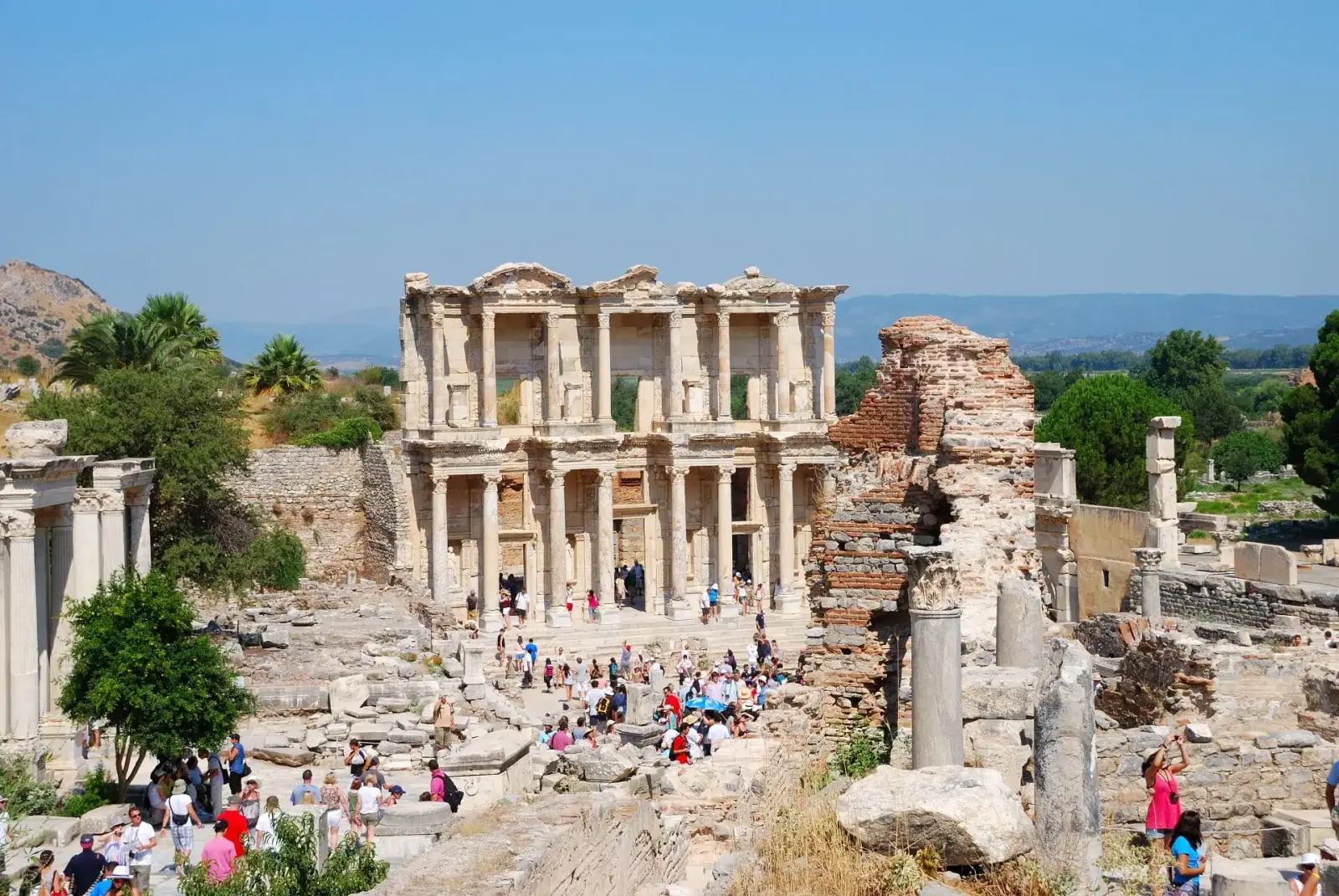
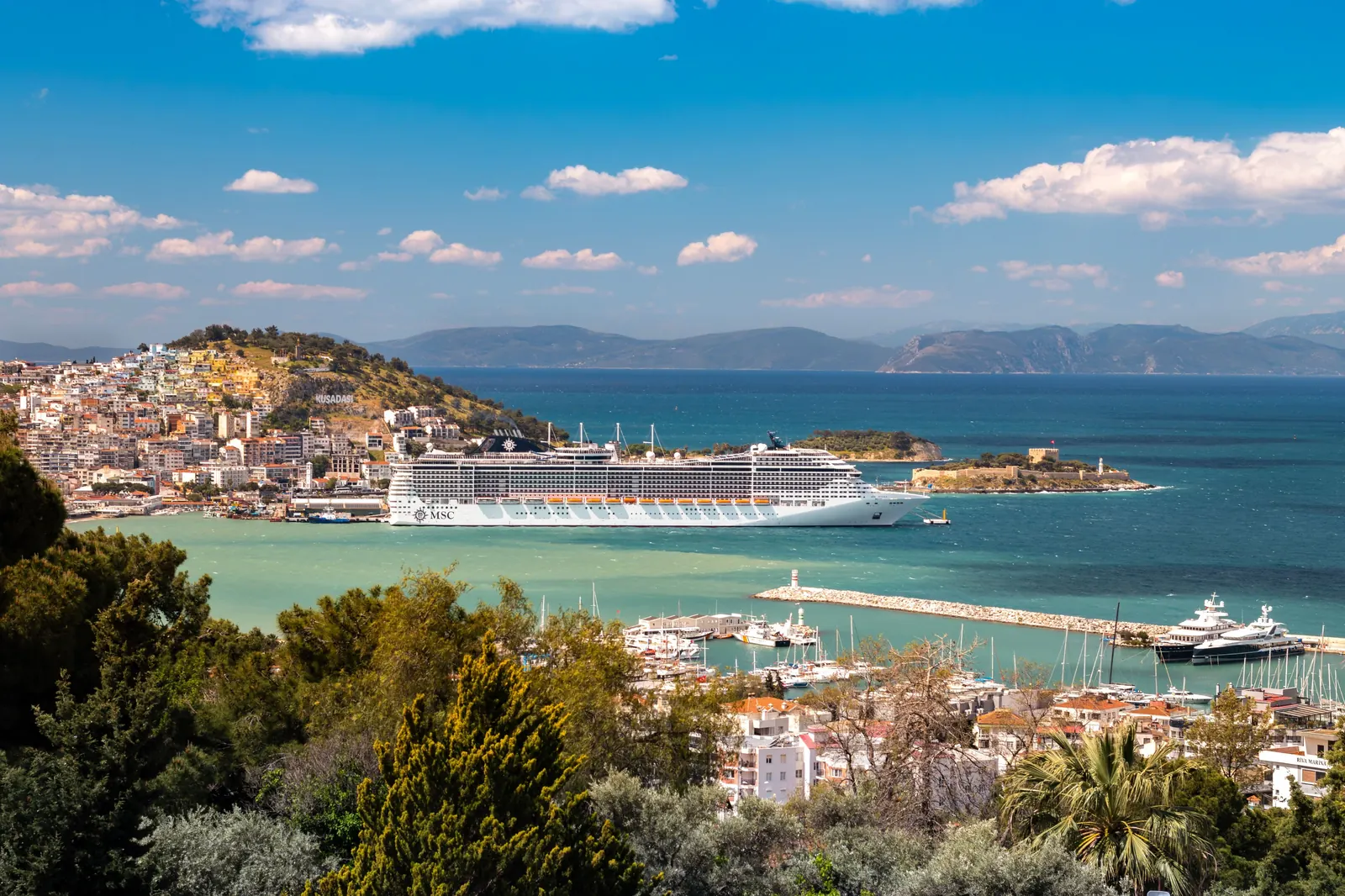
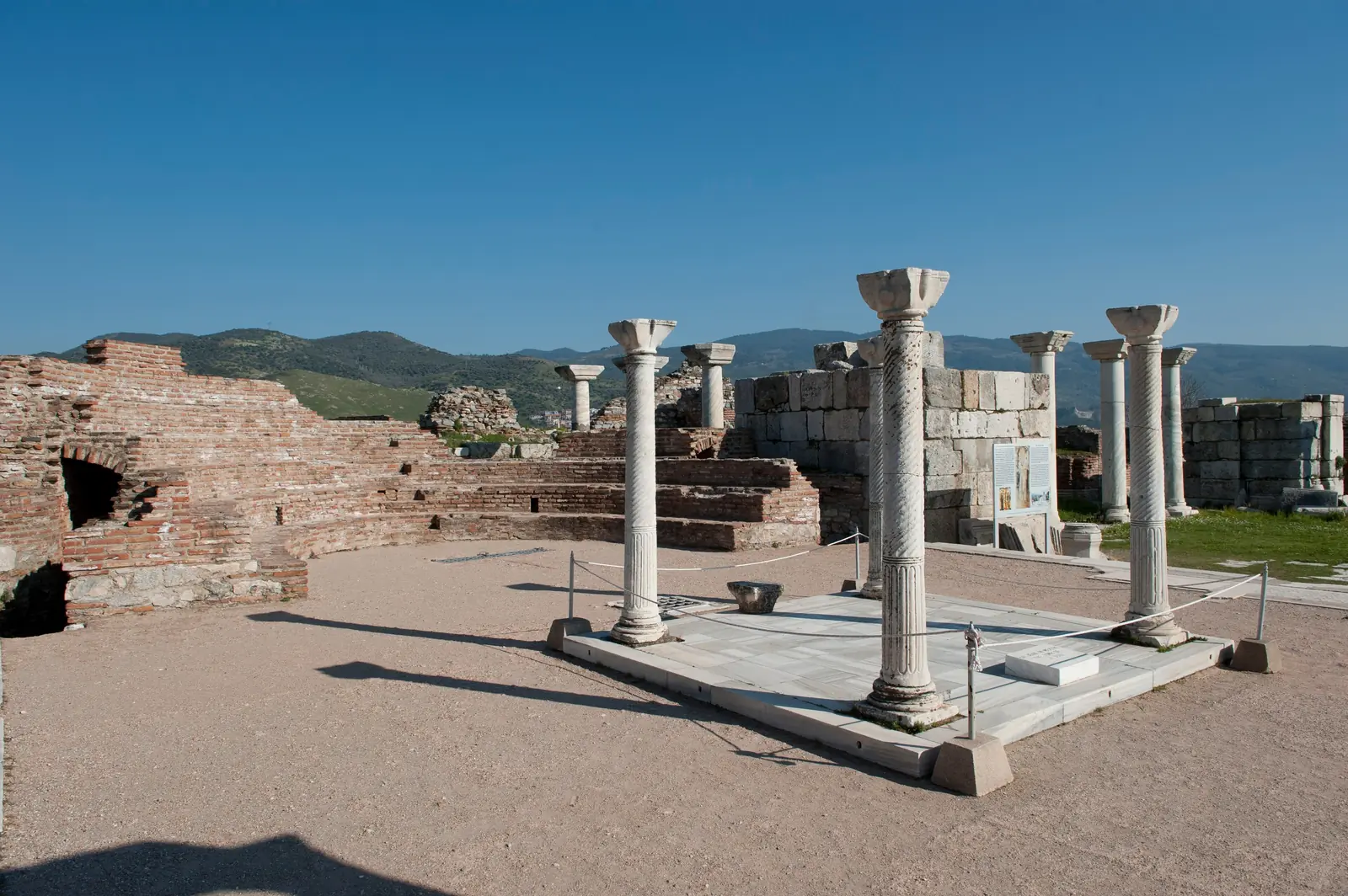
Not by the water, realistically — there is no passenger route that follows Paul's island-hopping course, and reconstructing it would take longer than most itineraries allow. But you can stand at the Ephesus end of the story exactly where it played out: the harbor quarter where his ship from Corinth first put in, the school of Tyrannus where the letters to Corinth were written, and Kusadasi's own stretch of that same Aegean, close enough that on a clear day the outbound feel of the crossing is not hard to imagine. Our Footsteps of Paul tour walks that ground in order, with these verses open as we go.
Sources & further reading
- Wolfram|Alpha — distance, Korinthos, Greece to Selçuk, Turkey — straight-line distance calculation: 388.5 km / 241.4 mi / 209.7 nmi
- World History Encyclopedia — Roman Shipbuilding & Navigation — typical Mediterranean sailing speeds, 4–6 knots
- Acts 18:18–21 (KJV) — Bible Gateway — KJV, Bible Gateway
- Acts 19:1 (KJV) — Bible Gateway — KJV, Bible Gateway