
Here 1 Corinthians signs its location like a letter's dateline: Paul is writing from Ephesus and intends to stay through spring. His two reasons form one of the most quoted paradoxes in Scripture — an open door, and many adversaries. Most men list the second as a reason to go; Paul lists both as reasons to remain.
The door and its adversaries
The "great door and effectual" is the Tyrannus phenomenon we can date to these very months: daily lectures radiating the message through every traveler in the hub city of Asia (Acts 19:9–10). The adversaries would soon acquire names and job titles — Demetrius and his guild were perhaps months away from their riot. Paul's military calm about both is the verse's enduring gift: opposition, in his arithmetic, is evidence the door is real.
The verses around the postmark
The surrounding lines add warm Ephesian detail: Timothy is on the road and must be received without fear "for he worketh the work of the Lord" (16:10); Apollos — the Alexandrian polished in Ephesus — declines for now to travel (16:12); and the paragraph closes with the drumbeat every Ephesian excavator should have over the desk: "Watch ye, stand fast in the faith, quit you like men, be strong" (16:13).
Standing in the verse
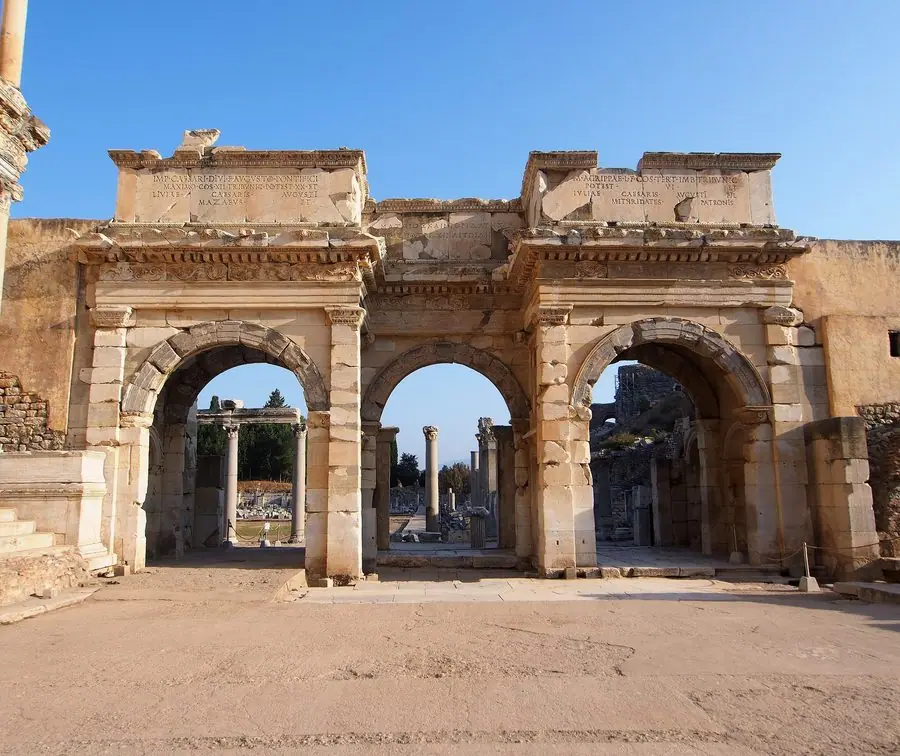
The city's literal great doors make the perfect pause for this passage — the triple-arched Gate of Mazaeus and Mithridates by the library is our favorite. A door built by two freed slaves, beside which we read the verse of the freest man in the city.
Sources & further reading
- 1 Corinthians 16:5–13 (KJV) — Bible Gateway — read the passage in context
- Britannica: Saint Paul the Apostle — the Ephesian years