
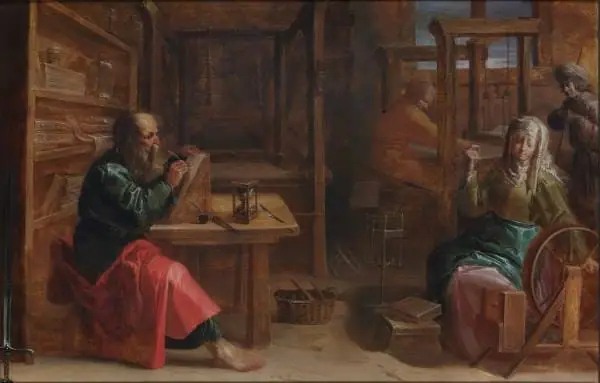
The first church building of Ephesus was nobody's basilica. It was the rented home of two refugees: Aquila, a Jewish tentmaker from Pontus, and his wife Priscilla, expelled from Rome with all its Jews by the emperor Claudius. Paul met them in Corinth, shared their trade and their roof, and when he sailed for Ephesus he brought them with him — and left them here as the advance party of the gospel in Asia (Acts 18:18–19).
The church in their house
Writing 1 Corinthians from Ephesus a few years later, Paul sends greetings from "Aquila and Priscilla... with the church that is in their house" (1 Corinthians 16:19). That short phrase is the founding document of Ephesian Christianity: before Timothy's episcopate, before John's Gospel, before the great councils, there was a couple's home with lamps lit and neighbors gathered. When you visit the Terrace Houses, you are walking through exactly the kind of rooms that sentence describes.
The tutoring of Apollos
Their most famous hour is a masterpiece of tact. Apollos of Alexandria arrived in Ephesus "an eloquent man, and mighty in the scriptures" (Acts 18:24) — but his gospel stopped at the baptism of John. Aquila and Priscilla did not correct him from the floor; "they took him unto them, and expounded unto him the way of God more perfectly" (Acts 18:26). A private meal, a gentle completion, and the church gained one of its greatest preachers. Notably, Luke names Priscilla first in that verse — the early Church remembered her as a teacher in her own right.
"Who have for my life laid down their own necks"
Something happened in Ephesus that we glimpse only in Paul's gratitude. Writing to Rome, he salutes "Priscilla and Aquila my helpers in Christ Jesus: who have for my life laid down their own necks: unto whom not only I give thanks, but also all the churches of the Gentiles" (Romans 16:3–4). Many scholars connect that mortal risk to Paul's Ephesian crisis — the riot, or the deadly danger he calls "our trouble which came to us in Asia" (2 Corinthians 1:8). Whatever the event, the couple put their necks between Paul and death, and every Gentile church knew it.
Patrons of an idea
Aquila and Priscilla moved on as tentmakers do — Rome again, and tradition returns them once more to Ephesus, where 2 Timothy sends them its greeting (2 Timothy 4:19). They left no monument, which is fitting: their legacy is the idea that a church is not a building but a household with open doors. Ephesus learned that idea at their table.
Sources & further reading
- Acts 18 (KJV) — Bible Gateway — Corinth, Ephesus and Apollos
- Romans 16:3–5 (KJV) — Bible Gateway — "laid down their own necks"
- Britannica: Priscilla and Aquila — the couple in history