
Historians prize nothing like a hostile witness. Here is Demetrius, with every motive to exaggerate nothing, telling his guild exactly how far Paul's message has spread — "not alone at Ephesus, but almost throughout all Asia" — and exactly what it says: the handmade gods are no gods. It is Paul's entire Areopagus theology (Acts 17:29), compressed by an enemy into one clause.
Why the words stung
For a man whose living was miniature silver temples, "no gods made with hands" was not philosophy; it was a product recall. Demetrius's genius was to weld wallet to worship in a single speech — trade endangered, then temple despised, then goddess dethroned (19:25–27) — the escalation that turned a guild meeting into a city riot. The verse also quietly certifies the strategy of the school of Tyrannus: two years of daily lectures really had reached "almost all Asia."
Standing in the verse
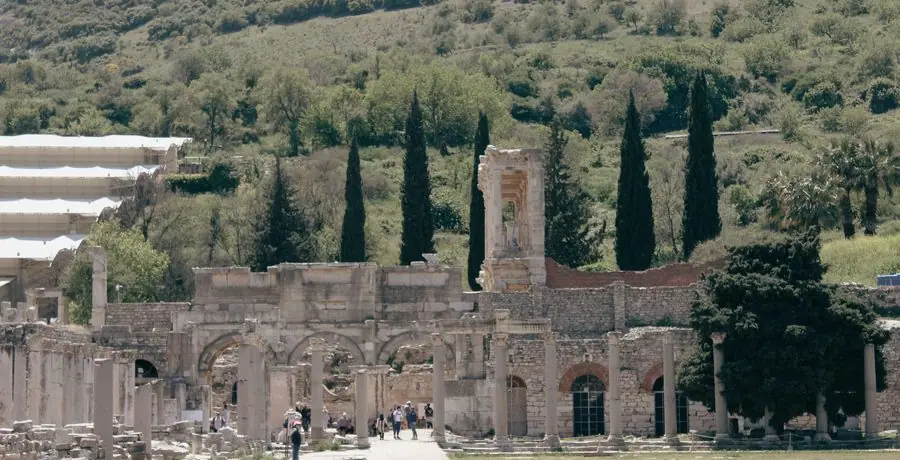
The Commercial Agora, beside the theater, is the natural home of this verse — the marketplace where shrine-sellers had their stalls and where a message that emptied stalls was heard as a declaration of war. Our guides read Demetrius's whole speech there; the walk from his marketplace to the theater takes exactly as long as a riot needs.
Sources & further reading
- Acts 19:23–27 (KJV) — Bible Gateway — read the passage in context
- Britannica: Temple of Artemis — the industry at stake