
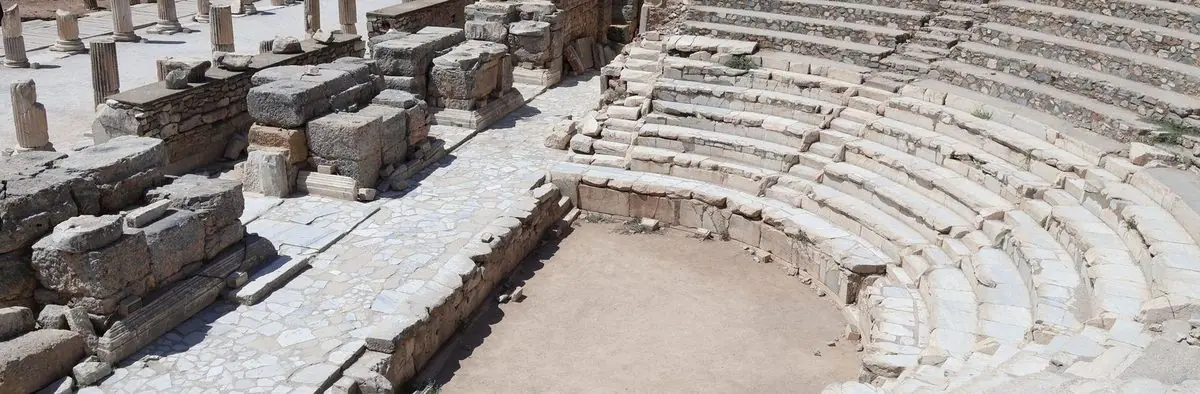
Every mob eventually meets its match, and in Ephesus the match was procedure. The grammateus — "townclerk" in the KJV's lovely rendering — was no minute-taker but the city's leading civic official, the link between the Greek city and its Roman overlords. Inscriptions unearthed at Ephesus name the office exactly as Luke does: one of those quiet convergences of spade and Scripture that historians treasure.
The speech, in four cool moves
His address (19:35–41) is a masterclass in crowd management. Flattery first: everyone knows Ephesus guards the great goddess and her heaven-fallen image — "the image which fell down from Jupiter" likely recalls the cult statue's legend, perhaps born of a meteorite. Then facts: these men have robbed no temple, blasphemed no goddess. Then process: courts sit, proconsuls exist, "the law is open." Then the quiet threat that lands hardest: Rome punishes cities for unlawful assemblies. "And when he had thus spoken, he dismissed the assembly." Not a miracle in sight — and the church is saved by good government.
Standing in the verse
Two stops belong to this verse: the theater where he spoke, and the Odeon–state agora quarter where his office worked and the lawful assembly he invoked actually convened. Our guides love him unashamedly; he is the patron saint of everyone who has ever calmed a meeting.
Sources & further reading
- Acts 19:35–41 (KJV) — Bible Gateway — read the passage in context
- Britannica: Ephesus — civic institutions of the city