
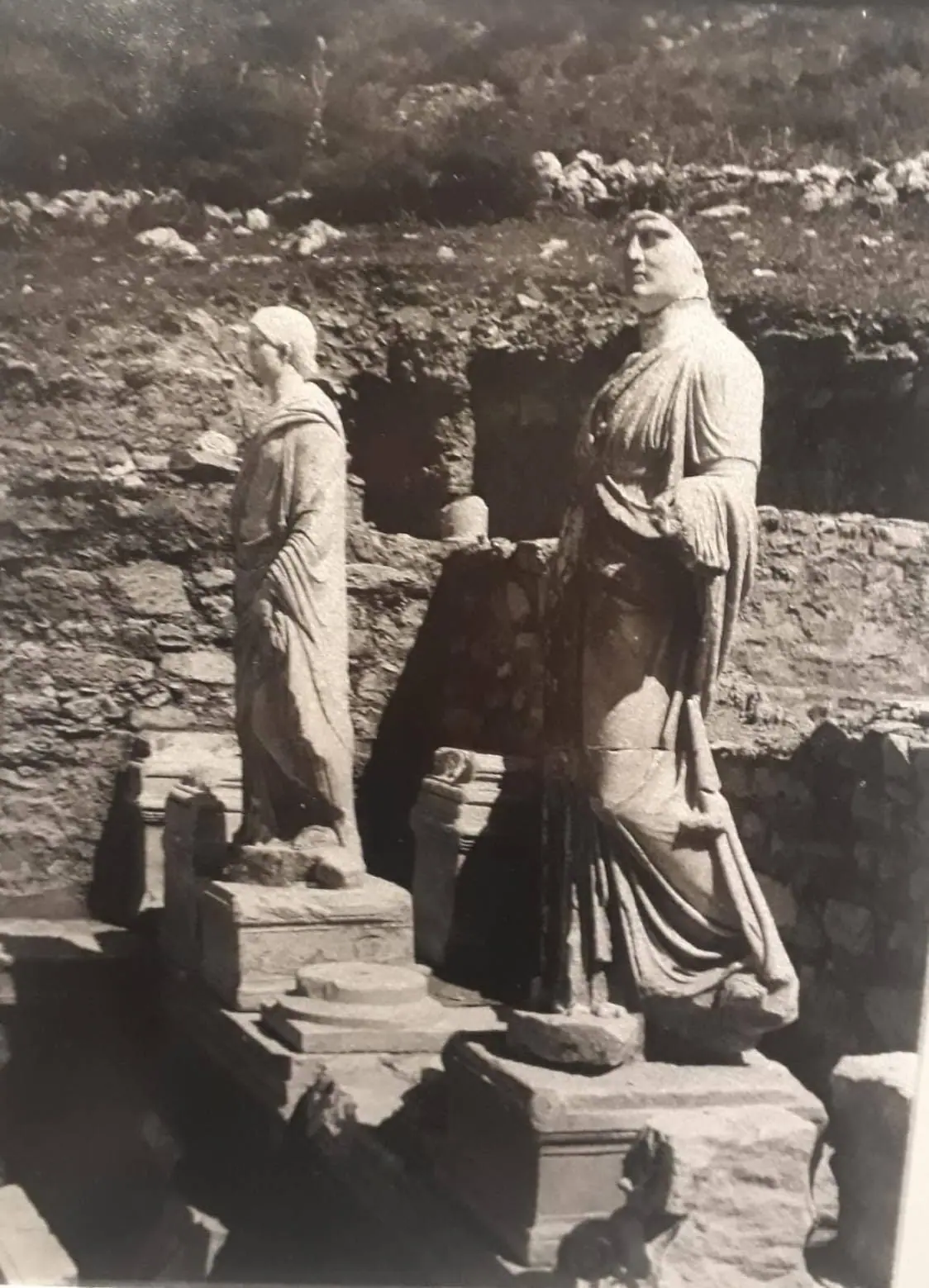
Luke — physician, companion of Paul, author of the third Gospel and of Acts itself — walked into Ephesus within his own book, and centuries of tradition kept him connected to this coast. So when John Turtle Wood, the discoverer of the Temple of Artemis, uncovered a circular monument bearing a carved bull beside a cross, the conclusion felt irresistible: the winged ox is Luke's ancient emblem. Wood announced the grave of Saint Luke, and the name has clung to the ruin ever since.
What the stones actually show
The structure began as a circular Roman building of the second century — possibly a monument or fountain — ringed by columns on a stepped platform. In the Byzantine era it was unmistakably converted into a church, which tells us Ephesian Christians themselves venerated something or someone here. The bull-and-cross relief is genuine and can be seen among the stones; whether the bull was carved as Luke's symbol or was an older pagan relief later baptized with a cross — as happened all over Ephesus — is exactly the sort of question scholars still enjoy.
The rival tombs
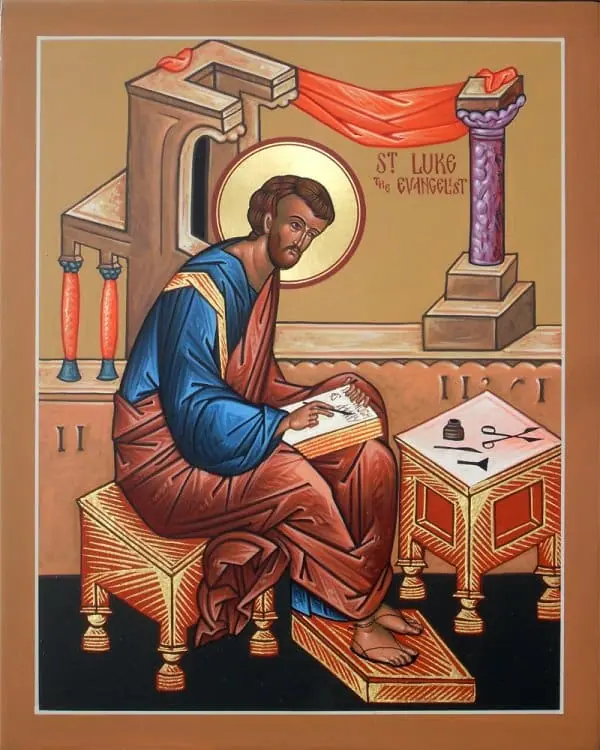
Honesty requires the full map: ancient tradition also records Luke dying in Greece, with his relics famously translated to Constantinople in 357 and later associated with Padua. Relics travel; traditions multiply; and a city as apostolic as Ephesus attracted every saint's story sooner or later. What is certain is that Byzantine Ephesus honored this spot as holy — and that the Evangelist of the "we" passages of Acts knew this coastline with his own eyes (Acts 20:15–17 sails right past).
Visiting
The monument's ruins lie near the upper entrance of Ephesus, easily added to any of our days. It makes a wonderful five-minute chapter for lovers of a good historical detective story — and a fitting pause to thank the author to whom we owe the entire Ephesus narrative of Acts.
Sources & further reading
- Britannica: Saint Luke — the Evangelist's life and traditions
- Acts 20:13–17 (KJV) — Bible Gateway — Luke sailing these waters in the "we" narrative