
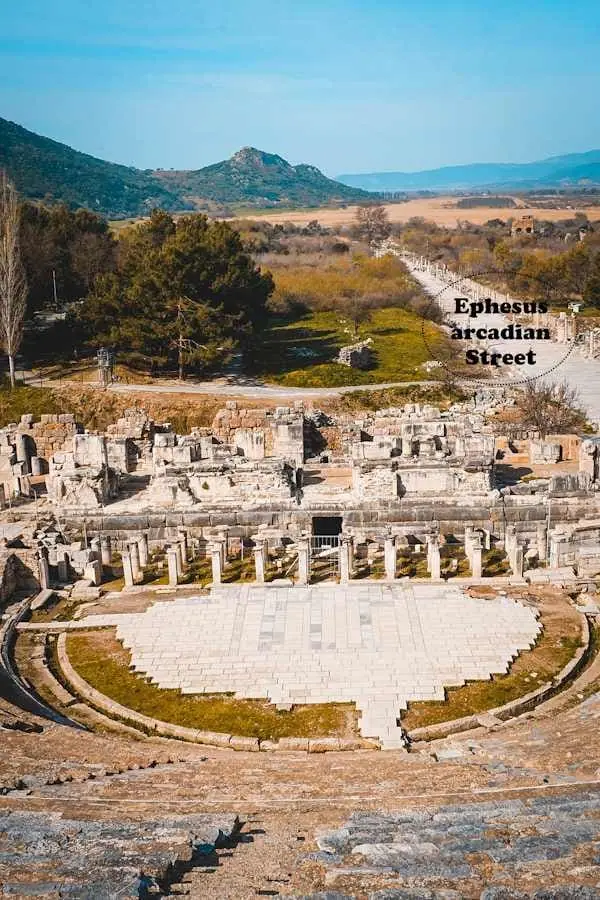
Luke puts the verse in parentheses, as if apologizing for the smallness of the cause. Trophimus, a Gentile believer from Ephesus, had traveled with Paul to Jerusalem carrying the churches' relief collection (Acts 20:4). Hostile pilgrims from Asia — who knew his Ephesian face — saw him with Paul in the city and leapt to the incendiary conclusion: Paul had taken a Greek past the temple's barrier wall, a crime whose warning inscriptions promised death.
From rumor to Rome
The supposition was false; the riot was real. Paul is mobbed in the temple courts, rescued by Roman soldiers, and never walks free again in Acts — hearings, prisons, shipwreck and Rome follow. The deep irony belongs to Ephesus: Paul survived an actual riot in Trophimus's hometown, only to be undone in Jerusalem by an imagined offense involving a hometown friend. Trophimus surfaces once more, touchingly, in Paul's last letter: "Trophimus have I left at Miletum sick" (2 Timothy 4:20) — still on the road, still serving, still near home.
Standing in the verse
Trophimus has no monument — ordinary co-workers rarely do — but his city is his memorial. He walked these streets as one of the church's young men, formed in the Tyrannus years; on our tours he stands for all the unnamed Ephesian believers whose footsteps carried the gospel farther than they ever guessed.
Sources & further reading
- Acts 21:27–36 (KJV) — Bible Gateway — read the passage in context
- 2 Timothy 4:20 (KJV) — Bible Gateway — read the passage in context