
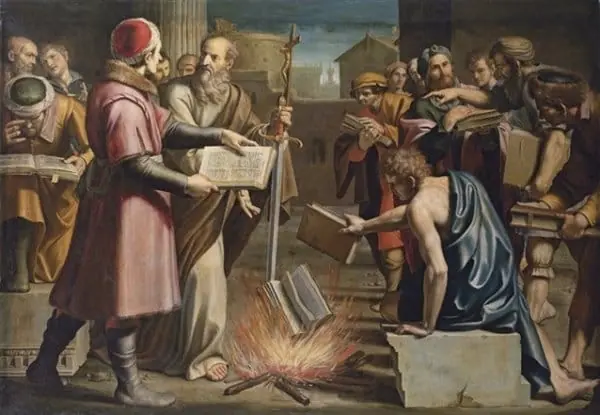
Ephesus was the Silicon Valley of ancient magic — the phrase "Ephesian letters" meant magic spells the way "champagne" means a region's wine. Into this market stepped seven freelance Jewish exorcists, sons of one Sceva, who tried borrowing the newest power-name in town: "We adjure you by Jesus whom Paul preacheth" (19:13). The possessed man's reply is the most chilling one-liner in Acts — "Jesus I know, and Paul I know; but who are ye?" — and the seven flee naked and wounded.
Fear that led to a bonfire
Our verse records the citywide shockwave: everyone hears, fear falls, and the Name proves unborrowable and unstoppable. The practical sequel follows immediately — believers who had quietly kept their old spellbooks bring them out and burn them publicly, fifty thousand pieces of silver going up in smoke (19:19). In a city that exported magic, that fire was an economic event, and Luke closes the scene like an accountant of grace: "So mightily grew the word of God and prevailed."
Standing in the verse
A public burning belongs in a public square — the agora or the open spaces of the harbor quarter, through which our tours pass. The pause we love for this verse is beside the agora: the marketplace where the scrolls that ruled the city's fears became light and ash.
Sources & further reading
- Acts 19:11–20 (KJV) — Bible Gateway — read the passage in context
- Britannica: Ephesus — the city of the Ephesian letters