
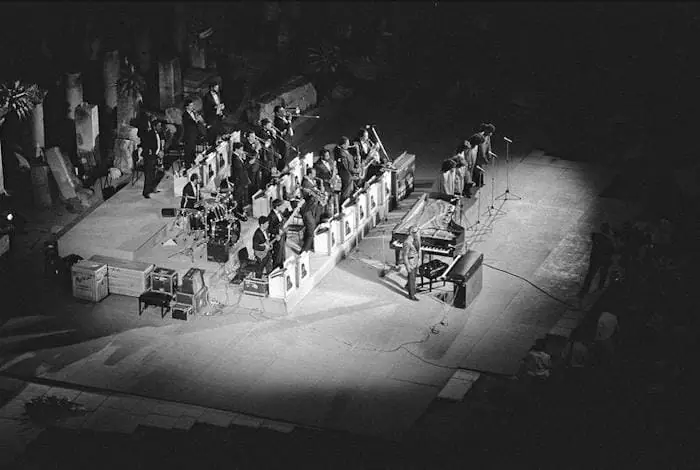
Readers sometimes forget that 1 Corinthians is an Ephesian letter — written from this city, in these years ("I will tarry at Ephesus," 16:8). So when Paul reaches for his most violent image of what Ephesus has cost him, the Corinthians understood he was describing his present address: I have fought with beasts here.
Arena or metaphor?
Taken literally, the sentence would put Paul on the sand of an arena — and Ephesus's theater was indeed later fitted for beast shows. But Roman citizens could not lawfully be thrown to beasts, and Paul's careful qualifier "after the manner of men" — humanly speaking — tilts most interpreters toward metaphor: the "beasts" were human. Ephesus gave him candidates enough: the mob, the magicians, the guilds, the adversaries of that same letter's famous line, "a great door and effectual is opened unto me, and there are many adversaries" (16:9). Ancient writers called dangerous men "beasts" exactly this way.
By the second century the line had grown into legend. The Acts of Paul and Thecla, a popular early Christian tale, gives its heroine her own ordeal among wild beasts, an echo many readers hear of this verse, and Ephesus kept the pairing on a cave wall: the fresco of Paul and Thecla in the Grotto of Saint Paul on Bülbül Mountain. The grotto is closed to visitors for conservation; no reopening date has been announced (October 2026).
The point beneath the beasts
The image serves an argument, and the argument is everything: if the dead rise not, the beast-fighter is a fool — "let us eat and drink; for to morrow we die." Paul stakes the entire meaning of his Ephesian sufferings on the resurrection. It is the boldest wager in the epistles, made from lodgings somewhere in this city.
Standing in the verse
Ponder it in the theater — whether or not sand ever touched Paul, the building embodies the stakes — or in the quiet of the agora he crossed daily among his human beasts. Either way, the verse turns Ephesus into what it was for Paul: not a career stop but a wager of his life.
Sources & further reading
- 1 Corinthians 15:30–34 (KJV) — Bible Gateway — read the passage in context
- 1 Corinthians 16:8–9 (KJV) — Bible Gateway — read the passage in context