
The Ephesians liked what they heard in the synagogue and asked Paul to stay longer (Acts 18:20). His answer is a masterclass in apostolic scheduling: a firm no for now, a warm promise for later, and the whole thing placed under one condition — "if God will." Then the sails fill, and Ephesus watches its greatest visitor disappear toward Caesarea.
Four words that became a habit
That small conditional clause had a long career ahead of it. James would soon make it a rule for all believers: "For that ye ought to say, If the Lord will, we shall live, and do this, or that" (James 4:15). Christians have signed letters with it for twenty centuries — Deo volente, D.V. — and the habit begins, as far as the record shows, right here at the harbor of Ephesus, with a promise Paul had every intention of keeping and the humility not to guarantee.
The promise kept
God willed. Within a couple of years Paul walked back into the city overland "through the upper coasts" (Acts 19:1) and stayed longer than he ever stayed anywhere — the two-plus years of the school of Tyrannus, the book burning and the riot. Luke, a careful writer, surely enjoyed the symmetry: the chapter that begins with a sailed-away promise is answered by the longest settled ministry in his whole book.
Standing in the verse
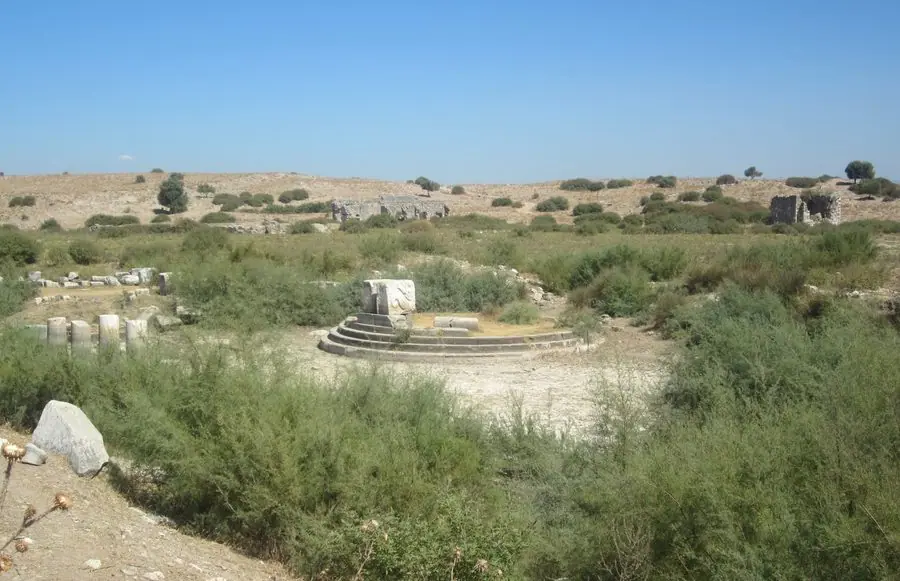
The harbor Paul sailed from now lies under silt meadows at the end of the Arcadian Way — the marble avenue that still runs seaward from the Grand Theater. Stand at its end, look toward the distant glitter of the Aegean, and you are watching his ship go, promise and all.
Sources & further reading
- Acts 18:19–22 (KJV) — Bible Gateway — read the passage in context
- James 4:13–15 (KJV) — Bible Gateway — read the passage in context